ADCs
Antibody-Drug Conjugates (ADCs) combine the specificity of monoclonal antibodies with the cytotoxic power of highly potent small molecule drugs. Their structural complexity (multiple conjugation strategies, heterogeneous payload distribution, diverse linker technologies) requires a rigorous and tailored analytical approach. Whether for early-stage characterisation, release testing, stability assessment or in vivo bioanalysis, ADCs pose unique challenges at every step of their development.
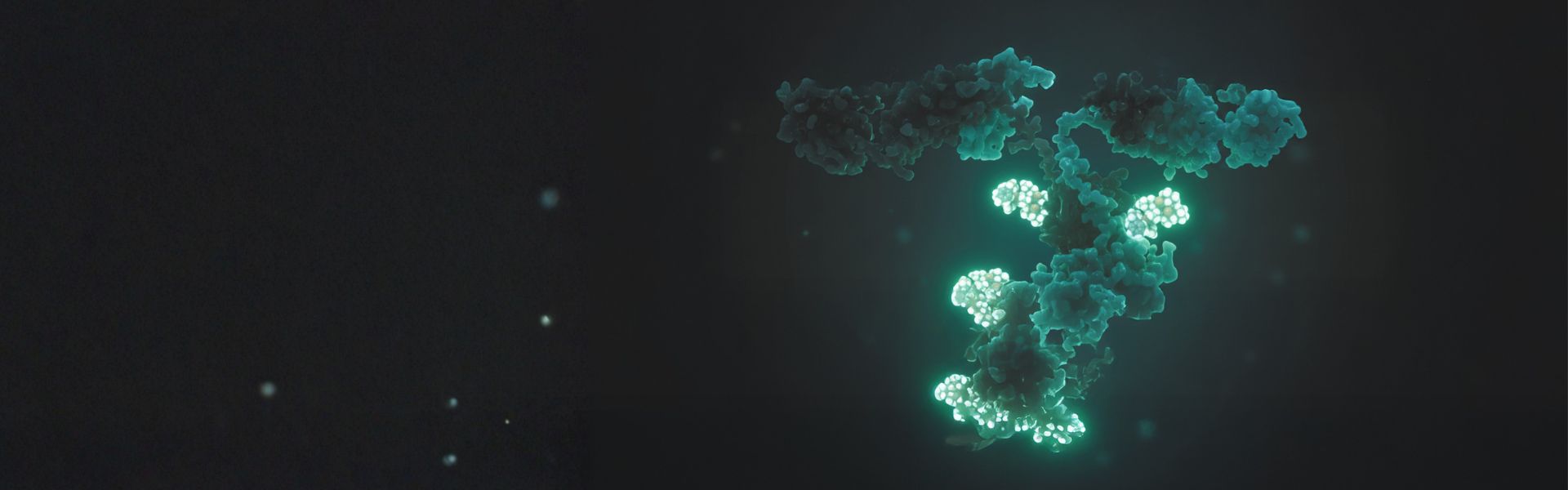
Complex by design, challenging by nature
At Quality Assistance, we support biopharmaceutical companies with fully integrated analytical services tailored to the complexity of ADCs. Drawing on our expertise in both biotherapeutics and cytotoxic payloads, we deliver robust actionable data to move your drug candidates forward with confidence and clear insights. We provide end-to-end support for your ADC projects, from structural characterisation and DAR profiling to potency assays, release testing, stability studies and bioanalysis.
Throughout non-clinical and clinical development, our scientific team provides you with customised solutions in terms of analytical protocols and innovative technologies to help you move your product toward registration.
Related products


Analytical challenges we help you solve

ADCs are structurally and functionally complex. At Quality Assistance, our role is to help bring clarity into this complexity by tackling the critical challenges specific to your ADC development.
We adapt our analytical strategies based on your conjugation type (lysine, cysteine, site-specific), linker technology (cleavable/non-cleavable) and payload category (maytansinoids, auristatins, amanitins, etc.). We support your development journey with fully compliant, science-driven analytical strategies tailored to your needs. Our services cover:
| Intact molecular weight | MS (ESI-QTOF, MALDI-TOF) / SDS-PAGE / cGE |
|---|---|
| Isoforms | MS (ESI-QTOF, MALDI-TOF) / IEF / 2D gel / icIEF / (U)HPLC (IEX, RP, SEC, HIC) / Peptide mapping |
| Peptide mapping | UPLC (UV, QTOF) / MALDI-TOF |
| Immunological identification | ELISA / ECL (MSD) / Luminex / Western blotting / SPR (Biacore) / BLI (Octet) |
| Identification of linked cytotoxic payload | UPLC (UV/MS) |
| N- and C-terminal sequencing | Peptide mapping (UPLC-QTOF) / MALDI-TOF (ISD) |
| Protein quantity | BCA / Lowry / Bradford / UV / (U)HPLC (UV) / Slope Spectroscopy (SoloVPE) |
|---|---|
| Absolute protein content determination | ICP-MS (S, isotope dilution) |
| Determination of extinction coefficient | UV + ICP-MS (S, isotope dilution) |
| Drug-to-Antibody Ratio (DAR) | (U)HPLC (UV) / UV / HIC / MS (ESI-QTOF, MALDI-TOF) / AF4 (UV/RI/MALS) / SEC-HPLC (UV/RI/MALS) / icIEF |
| Determination of free cytotoxic payload | (U)HPLC (UV/MS) / 2D-LC (UV/MS) |
| Mass distribution profile | MS (ESI-QTOF, MALDI-TOF) |
|---|---|
| Structural integrity | CD / FT-IR |
| Isoforms | IEF / icIEF / (U)HPLC (IEX, RP, SEC, HIC) / 2D gel / Peptide mapping / MS |
| Aggregation, fragments and particle size distribution | SEC-(U)HPLC (UV, RI, MALS) / AF4 / cGE / DLS / SDS-PAGE / Imaging Particle Analysis |
| Glycosylation patterns | UPLC (FLUO, QTOF) / MALDI-TOF / CE (LIF) / GC (MS) |
| Disulphide bridges | SDS-PAGE / cGE / Peptide mapping |
| Free thiols | Fluorescence (NPM) / UV (Ellman, DTNB) |
| Degradation patterns (oxidation, deamidation, Lys-term truncation, etc.) | IEX / RP-(U)HPLC / SEC-(U)HPLC / SDS-PAGE / (U)HPLC (MS) / CE (icIEF, cGE) / 2D gel / Peptide mapping (MAM using HRMS) |
| Immunoassays / Cytotoxicity | ELISA / ECL (MSD) / Luminex / Cell-based assays / FACS / SPR (Biacore) / BLI (Octet) / Gyrolab |
| Residual solvents | HS-GC (FID, MS, ECD) |
| Residual proteins (including HCP, protein A, purification Ab) | ELISA / ECL (MSD) / Luminex / Gyrolab / UPLC (MS/MS) / Western blotting / 2D gel / 2D-DIGE |
| Buffer components (including BSA, Tween, β-OG, antibiotics) | ELISA / ECL (MSD) / Colorimetry / (U)HPLC (UV, MS, RI, ELSD, CAD) |
| Antifoam agents (PPG, PEG, silicone oil) | ICP (MS, OES) / (U)HPLC (ELSD, CAD) |
| Residual DNA | qPCR / ddPCR / PicoGreen |
| Elemental impurities | ICP (OES, MS) |
| Microbiology | Bioburden / Sterility (filtration, direct inoculation) |
| Endotoxins and pyrogens | LAL (kinetic, end point) / rFC / MAT |
| Leachables | GC (FID, ECD, MS) / ICP (OES, MS) / (U)HPLC (UV, ELSD, CAD, MS) |
|---|---|
| Container Closure System Integrity | Bubbling / Dye ingress / Microbial ingress |
| Cytotoxicity / Biological reactivity | Cell-based assays / USP <87> |
| Break Loose and Glide Force (BLGF) for prefilled syringes |
Platforms and technologies

Our analytical platform is optimised for ADCs development, with cutting-edge instrumentation:
- Comprehensive chromatographic and electrophoretic techniques including HIC, SEC, IEX, cGE, icIEF and RP-UPLC/MS for detailed assessment of drug-to-antibody ratio (DAR), aggregation and charge variants.
- High-resolution Mass Spectrometry platforms such as QTOF and MALDI-TOF for intact mass analysis, peptide mapping, glycosylation profiling and PTMs characterisation.
- Binding kinetics and affinity analysis using Biacore (SPR) and Octet (BLI) platforms.
- Functional and potency assays including multiplex immunoassays and cell-based assays (cytotoxicity and effector functions)
- Elemental impurities profiling with ICP-MS, qPCR for residual DNA, and ELISA for host cell proteins and other process-related contaminants
We offer a fully integrated workflow on a single site, with full compliance with ICH, EMA and FDA standards and under a GxP compliant environment.
Bioanalytical services

The bioanalysis of ADCs goes far beyond traditional protein therapeutics. Cleavable vs. non cleavable linkers, payload stability… their complexity requires dedicated methods at each development stage.
At Quality Assistance, we deliver tailored, GxP-compliant bioanalytical solutions for both non-clinical and clinical studies, whatever your ADC’s design. We support:
- Pharmacokinetics/toxicokinetics analysis: total antibody (DAR ⩾ 0), conjugated antibody (DAR ⩾ 1), in vivo determination of DAR, free drug by LC-MS/MS
- Drug-specific biomarkers
- Immunogenicity assessment: screening, confirmatory, titration and neutralisation assays
Why (bio)pharmaceutical companies choose us
Working with Quality Assistance means reliable data, proactive support, and full project traceability via our in-house LIMS. From method development to validation, QC testing and reporting, our team of experts ensures:
- ADC-focused scientific expertise: with over 20 years of experience in complex biologics, our team has developed deep expertise in ADCs, including diverse conjugation strategies and payload formats.
- End-to-end analytical capabilities under one roof (facilities dedicated to highly-potent / cytotoxic compounds including OEB5): from method development to release testing, we offer a fully integrated analytical workflow for ADCs. All required analytical tests are performed in-house, ensuring consistency, speed, and scientific continuity throughout your project.
- State-of-the-art instrumentation for ADC characterisation: we continuously invest in advanced technologies to support the comprehensive analysis of ADCs, from structural integrity to potency and isoform / impurity profiling.
Driving ADC development with clarity and compliance
With Quality Assistance, you gain access to comprehensive, regulatory-ready analytical expertise tailored to your ADC projects, supported by cutting-edge technologies and multidisciplinary know-how in chemical and biological sciences. We help you overcome analytical challenges, manage complexity with precision and excellence, and accelerate your path to patients. Curious to know how we can support you with our analytical solutions?
Get in touch with our scientists