Synthetic peptides
Synthetic peptides are a rapidly expanding class of drug modalities that occupy a unique space between small molecules and biotherapeutics. Their high specificity, low toxicity and reduced accumulation in tissues make them promising candidates for treating a wide range of diseases, from metabolic or immune disorders to oncology.

Navigating the crossroads of innovation and complexity
Developing these hybrid drugs presents a unique set of analytical challenges. To succeed, you need a tailored, expert approach at every stage of development.
At Quality Assistance, we have over four decades of experience supporting the pharmaceutical industry with fully integrated analytical services. We provide tailored solutions and robust data to help you confidently move your synthetic peptide drug candidates through the entire development pipeline up to marketed products.
Analytical challenges we help you solve

The hybrid nature of synthetic peptides requires a sophisticated analytical strategy to address critical challenges in their development.
At Quality Assistance, we help bring clarity to this complexity by tackling key analytical hurdles. We adapt our strategies to your product's specific characteristics, such as molecular weight and aminoacid sequence, chemical modifications and potential for aggregation. This includes confirming the primary and high-order structures, identifying and quantifying impurities and degradation products, and overcoming the challenges of accurate quantification in complex biological matrices for pharmacokinetic and toxicokinetic studies.
| Intact peptide | (U)HPLC (UV, RI, fluo, MS) / CE |
|---|---|
| Molecular weight | ESI-MS / MALDI-TOF |
| Peptide mapping and/or sequencing | UPLC (UV, MSE) |
| Immunological identification | ELISA-based platforms |
| Assay | UV / (U)HPLC (UV, RI, fluo, MS) |
|---|---|
| Determination of extinction coefficient | UV + ICP-MS/MS (isotope dilution) |
| Purity profile | IEX / RP-(U)HPLC (UV, MS) / icIEF |
|---|---|
| High order structure | CD / FT-IR |
| Mass distribution profile | ESI-MS / MALDI-TOF / SEC-(U)HPLC / UV |
| Chemical modifications | (U)HPLC (UV, MS) / CE (UV, LIF) |
| Degradation patterns (Oxidation, deamidation, truncation) | IEX / RP-(U)HPLC (UV, MS) / CE (icIEF, cGE) |
| Aggregation and particle size distribution | AF4 & SEC-(U)HPLC (UV, RI, MALS) / DLS / Imaging Particle Analysis |
| Disulphide bridges | Peptide mapping (UPLC-UV/MS) / SDS-PAGE / cGE |
| Free thiols | Fluorescence (NPM) / UV (Ellman) |
| Enantiomeric purity | (U)HPLC-UV / Fluorescence / GC-MS / CE |
| Counter-ion content (Mass balance) | (U)HPLC (UV, MS) / ICP (OES, MS) |
| PEGylated peptides: Molecular weight distribution PEG-to-peptide ratio | MALDI-TOF / SEC (UV, RI, MALS) |
| PEGylated peptides: Free PEG | HPLC / CAD |
| Immunoassays | ELISA / ECL (MSD) / Luminex / SPR (Biacore) / BLI (Octet) |
| Cell-based assays (Cytotoxicity / Proliferative / Cell death / Cell migration / Cell receptor binding and activation / Reporter gene assays / etc.) | Different read outs |
| Microbiology | Bioburden / Sterility (filtration, direct inoculation) |
| Endotoxins and pyrogens | LAL (kinetic, end point) / rFC / MAT |
| Elemental Impurities | ICP-MS |
| Residual solvents (synthetic peptides) | HS-GC (FID, MS) |
| Leachables | GC (FID, ECD, MS) / ICP (OES, MS) / (U)HPLC (UV, ELSD, CAD, MS) |
|---|---|
| Container Closure System Integrity | Bubbling / Dye ingress (methylene blue, fluorescence) / Microbial ingress |
| Cytotoxicity / Biological reactivity | Cell-based assays / USP <87> |
| Break Loose and Glide Force (BLGF) for prefilled syringes |
Our technological platforms, your strategic advantage

We offer a powerful array of analytical platforms specifically optimised to meet the rigorous demands of synthetic peptide development.
Our cutting-edge instrumentation includes:
- High-Resolution Mass Spectrometry platforms such as the Waters Xevo G2-XS QTof and BioAccord for intact mass analysis and peptide sequencing, and Bruker autoflex maX MALDI/TOF for studying PEGylated peptides
- Advanced separative techniques including SEC, HIC, RP-UPLC(/MS), CE and GC(/MS) for detailed assessment of purity.
- ICP-MS for the precise determination of elemental impurities.
- Immunoassay and Cell-Based assay platforms including ELISA, MSD, Luminex, FACS, Biacore, Octet and Gyrolab for functional and immunogenicity profiling.
Bioanalytical services

The quantitative analysis of synthetic peptides in biological matrices in a challenging task due to their physicochemical characteristics and the complexity of the matrix itself.
Our GxP-compliant bioanalytical services provide tailored solutions for both non-clinical and clinical studies. We leverage LC-MS/MS, the gold standard for its superior selectivity and sensitivity, to ensure the precise measurement of drug and metabolite concentrations for reliable PK/TK data. In addition, we assess the potential for an immune response through a tiered approach of robust immunogenicity assays (e.g., ELISA, ECL, Gyrolab) to detect, quantify and characterise anti-drug antibodies (ADAs).
Driving peptide development with clarity and compliance
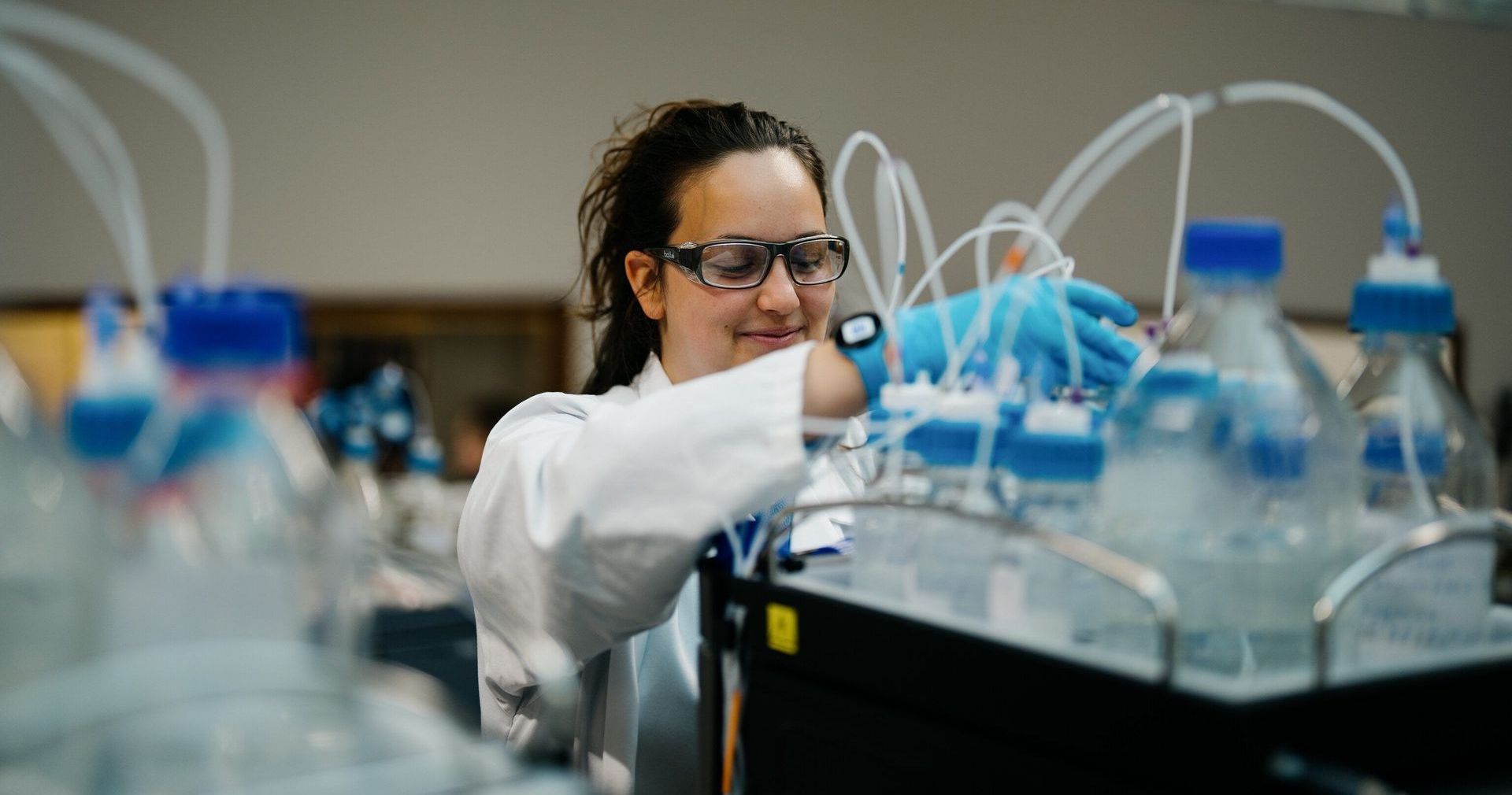
With Quality Assistance, you gain access to comprehensive, regulatory-ready analytical expertise designed to help you overcome your development challenges and accelerate your path to market.